Author: Dion Steinhauer

  • Hello, Advocate!

    Hello, Advocate!

    Now if your brother sins, go and show him his fault in private; if he listens to you, you have gained your brother” – Matthew 18:15

    “Truth carries with it confrontation. Truth demands confrontation; loving confrontation, but confrontation nevertheless.”

    ― Francis A. Schaeffer, The Great Evangelical Disaster

    Luke 10:29 – “But wishing to justify himself, he said to Jesus, “And who is my neighbour?”

    A Jewish lawyer to test Jesus had asked him how he could inherit eternal life. Jesus asked him what the law said about it. The man responded by saying, “YOU SHALL LOVE THE LORD YOUR GOD WITH ALL YOUR HEART, AND WITH ALL YOUR SOUL, AND WITH ALL YOUR STRENGTH, AND WITH ALL YOUR MIND; AND YOUR NEIGHBOR AS YOURSELF.” And Jesus said to him, “You have answered correctly; DO THIS, AND YOU WILL LIVE.” “But wishing to justify himself, he said to Jesus, “And who is my neighbour?” Instead of acknowledging his incapability to live according to the law, the lawyer has sought to justify himself. He wanted to show that he was already living right.

    The Problem

    It is not just a Jewish problem. I think there is a narcissist in every one of us. We must confess that it’s everyone’s problem. The problem lies at man’s heart is an unwillingness to acknowledge one’s mistakes and to seek grace because man by nature is self-oriented. Our self is important to all of us, and we instinctively try to defend ourselves, especially when we have to take responsibility for our actions and words that hurt others. 

    painting of man

    The problem of justifying one’s wrong actions began long ago in the Garden of Eden. Adam, instead of acknowledging his mistake, blamed Eve and God when confronted by God. He justified himself. Even Eve followed the trail of Adam by blaming the Serpent. Both Adam and Eve did not take responsibility for their sins. They were embarrassed to acknowledge that they were wrong.

    As the descendants of Adam and Eve, we too have expertise in justifying our wrongs when confronted. We see ourselves in that situation every day, maybe at home or work, and with friends and strangers. When confronted, we want to cover up our sins by guarding ourselves against the embarrassment of our faults and would like to paint a righteous image of ourselves. We all have an advocate within who is ever-present to defend us.

    One day in my conversation with a friend, I had spoken disgracefully of another friend. Upon hearing, my friend immediately confronted me that I was gossiping and unmerciful to my brother. I was upset by my friend’s confrontation, and soon the advocate in me justified my gossip. I tried to cover up my ghastly comments. After some time, I could see guilt resurfacing my heart and had to confess my offensive words.

    In another incident, when I confronted a preacher for wrongly interpreting a passage, the preacher took offence and began bragging about his greatness as a preacher instead of examining my comments. I could only see how self-centred he was.

    We all have similar issues with our self-importance and witness the same in others. It is essential to know that this is a problem that needs constant help.

    The Beginning of change

    Is this change even possible in an independent and self-obsessed culture?

    Every one of us is prone to fail in one or other ways daily. We fall in our thoughts, actions, behaviours, and in our relationships. Not many of us are willing to acknowledge one’s folly in contributing to the point of failure. We are more prone to blame others and are cynical towards others. We try to wrap ourselves in a fairy fantasy world of self-righteousness and perfectionism. Therefore, we fail to acknowledge the fundamental problem of our nature and give in to the blame game. 

    Justifying one’s faults gets dirty; the more we defend ourselves, the nastier we appear. In this process, one fails to acknowledge the fundamental problem with self, and we atone ourselves with words of self-righteousness by becoming our advocates. When we advocate ourselves, we manifest our sinfulness. The problem with us is that we have a high view of self and therefore demand respect from others.

    We all need to understand that we have nothing good in us, and God, in His mercy, called us by his gospel to become good, i.e., to become like his Son through his grace. The God-Man, our eternal High Priest, is our only advocate who makes us right.

    The only way to be grounded in reality is by exposing ourselves to the grace of the gospel of our Lord Jesus Christ every day. The gospel points us to the Cross of our Lord Jesus Christ. The gospel shows that we are sinful, and there is nothing in us that could cover up for our sins and gives us a right standing before God. The sacrifice of our Perfect High Priest alone can atone for our sins. As our eternal high priest, he stands as the mediator between God and man. We are in right standing before God because of His imputed righteousness. Christ alone by the indwelling Spirit supplies the sanctifying grace to be conformed into His image.

    We need this gospel grace every day and need to acknowledge our sinfulness and the need for Christ’s redeeming grace. The Cross shows our incapacity of pleasing God and points us to the throne of grace where we can find mercy for our daily lives.

    If we live every day realising that we are people with weaknesses and need grace and help, we wouldn’t be embarrassed by others’ confrontations. There is grace available for us in Christ Jesus, which liberates us from our self-importance and all the unpleasant things that flow from it. 

    God’s Design for our change

    God’s dynamics for our change is in the institution of the church. God placed us in a church for our sanctification. We must get this straight; a failure to confess our sins upon confrontation by others is a failure to benefit from the one-another ministry in the body of Christ. Consider these Bible verses:

    • Love one another (John 13:34).
    • Be devoted to one another in brotherly love (Romans 12:10).
    • Instruct one another (Romans 15:14).
    • Serve one another in love (Galatians 5:13).
    • Carry each other’s burdens (Galatians 6:2). 
    • Submit to one another out of reverence for Christ (Ephesians 5:21). 
    • In humility, consider others better than yourselves (Philippians 2:3).
    • Admonish one another (Colossians 3:16).
    • Encourage one another and build one another up (1 Thessalonians 5:11).
    • Spur one another (Hebrews 10:24).
    • Clothe yourselves with humility toward one another (1 Peter 5:5). 
    • Confess your sins to each other (James 5:16).
    • Pray for one another (James 5:16).

    These are few among such commandments. There is much emphasis on healthy relationships in the church to build one another up. We must learn the crucial role that the church plays in our sanctification. The aim of speaking to others of their sins is not to undermine them but to restore them (Galatians 6:1). Nevertheless, confronting one another with love and gentleness (Galatians 6:1) when one is in the wrong builds up an individual, and the body of Christ and such is the mark that we love others (Proverbs 27:5; 28:23). 

    Ministry of others in the church is the means of God’s grace to us. If we are not submissive to the ministry of others, we are shutting ourselves to the transforming grace of our Lord. God helps us grow into the image of our Lord Jesus not just in isolation but also in the community of God’s redeemed people. If the church is God’s plan, then one another ministerial relationships are part of it. To receive correction from others and a willingness to confess our faults are part of these relationships in the body of Christ. Staying away from such relationships in the body of Christ stunts our growth. Part of our maturing happens in the meaningful, purposeful fellowships of God’s people.

    Therefore, immaturity persists in isolation, and maturity thrives in fellowship. Every believer must be glad upon confrontation of one’s faults by others and must count it as a blessing. Confrontation of our faults must always lead us to introspection and repentance. Such one-another ministerial relationships will build an individual and the body of Christ.

    May God bless you with His grace

    Picture: Photo by Aarón Blanco Tejedor on Unsplash

  • Remember! What God has done – Happy Reformation Day

    Remember! What God has done – Happy Reformation Day

    The Church is called to be the light in the world, leading people from the deception of sin to the truth of the Living God. For centuries, the Roman Catholic Church has suppressed the truth and put people in darkness. The purpose of the Church and the Scriptures was defeated during this dark period.

    According to Church history, right from the early second century, the Church has slowly deviated from the word of God to mere human methods and traditions. By the Medieval period, the Church has come into a state of darkness. The corruption in the Church was so evident and strong that God called for a reformation.

    God in His own sovereign way worked out a reformation. He raised up his men who would expose the corruptions of the Roman Catholic Church and its popes. God enabled His men to fight until the truth was available for everyone. These men fought to bring back the scriptures to the primitive place and into the hands of every common man.

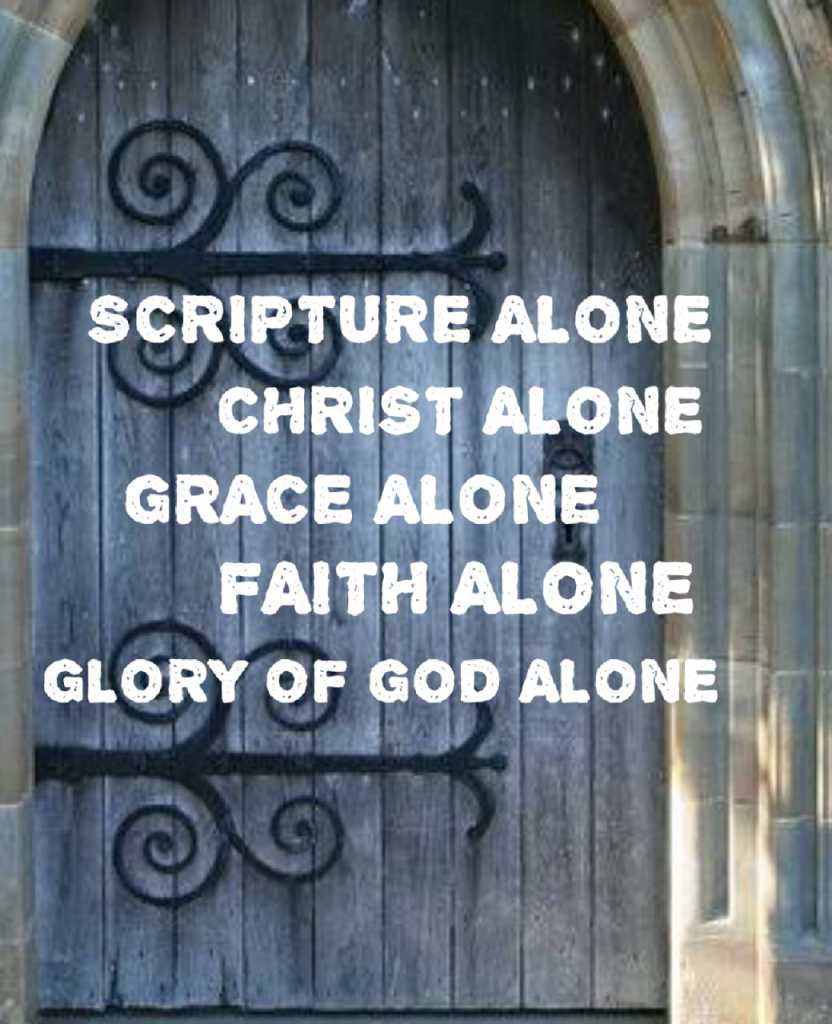
    Today is commemorated as the Reformation day. October 31, 1517, Martin Luther posted his 95 theses on the Wittenburg church door, leading to a firestorm response in Germany. Reformation fire spread across Europe. Men like John Calvin, Ulrich Zwingli, John Knox, William Tyndale and many others played a major role in Reformation and men like John Hus, John Wycliffe, Jerome of Prague and others paved the way for Reformation. Oh! We cherish now because of their efforts. We hold our Bibles because of them. They laboured hard that the Word of God would be available to the common man. They laid down their lives that all men may be exposed to the Truth of God’s Word which was hidden from the world by the Popes and the Roman Church. Let us thank God for what He has done through these men. The Truth of God had burst forth through the overlay of papism, and other Roman Catholic heresies.

    Let us re-affirm our allegiance to the truth revealed in the Scripture alone. Let us stand for the Truth like these men and honour God alone. For, the reformation is not over yet. Look at the modern church which is plagued by many heresies. Heresies, which spring from the wrong interpretation of the scriptures and also from those who are not subjected to the word of God.

    Lo! There are false preachers everywhere, who do everything in the name of Christ, but they do not know Christ, they do not preach the truth, and only speak lies to deceive people. And there are people who flock to them, who do not seek the truth. They both represent only a false Christianity. We need to expose them. It is time for the faithful remnant to take a stand against them and against the heresies that they teach. Let all the faithful become the beacon of lights in a time where darkness pervades everywhere. A vast majority of people in the church are ignorant of even fundamental truths of the Christian faith. Many do not know that we are justified by faith alone through God’s grace alone. They need to know the importance of the word of God and the right way of studying, interpreting and applying the same.

    Today’s Church needs men and women who are slaves of God and who are subjected to the word of God. We need more Pastors who would not care for their own bellies but rather shepherd the Church with love and truth. We need more faithful preachers and teachers who would expose and divide the word rightly and point people to Christ alone.

    It is time for us to pray for another reformation in our day and suffer to declare the wonderful Word of God with great Joy and Gladness. May God open the eyes of His people.

    May God bless His Church.

  • Constructive Criticism: An Opportunity to Grow

    Constructive Criticism: An Opportunity to Grow

    Prov. 15:31 – “If you listen to constructive criticism, you will be at home among the wise” (NLT).

    If you build a ministry where no one can give you feedback, you are teaching your congregation to be proud and self-defensive.1Mark Dever

    I used to think I was a good preacher because many people used to thank me for my sermons. My superior in the organisation I worked for never gave me any feedback. Unfortunately, he only criticised me behind my back! When I began preaching in a new church, people appreciated my sermons, but there was one man who was not fully satisfied. Initially, I was quite reluctant to take his feedback because I thought I was doing well and didn’t need to improve. But over time, he helped me see areas in which I could improve and grow, and this has been a blessing to me and my ministry. This positive experience helped me realise that I actually need feedback in every other area of my life.

    The word ‘criticism’ usually carries a negative connotation. When people think of criticism, they usually think about fault-finding or being judgmental. Indeed, not all criticism out there is beneficial because many only intend to attack us or to pull us down. Such are often pessimistic, and prejudiced, and such criticism causes a lot of damage. We need to be careful to seek and learn from the right kind of criticism.

    Constructive criticism focuses primarily on improvement or development. Its aim is not to attack someone or their work, but instead, to help the person improve. Now this does not mean we don’t have negative things to say while giving constructive criticism. In fact, the reason for criticism is to draw attention to errors or imperfections. However, the purpose for doing this is intentionally to spur others on to improve in character or work.

    It is easy for us to become critical and judgmental when we see the errors of others. And we are quick to form a negative impression of others in our minds and to treat them as hopeless or evil people. However, we should avoid looking down on them. Instead, when we see errors in others, we should prayerfully seek opportunities to help them grow.

    We need to remember that “all have sinned and fall short of God’s glory” (Rom. 3:23). All humans are flawed, and no one on this side of eternity is perfect. Even the best “saint” has his or her shortcomings, and this is because we all have sinful nature. We all will continue to struggle with our sinful nature as long as we live in this mortal frame. However, the gospel offers pardon for our sins, and also Christ’s redeeming grace for our everyday struggles:

    For the grace of God has appeared that offers salvation to all people.It teaches us to say “No” to ungodliness and worldly passions, and to live self-controlled, upright and godly lives in this present age,while we wait for the blessed hope—the appearing of the glory of our great God and Savior, Jesus Christ, who gave himself for us to redeem us from all wickedness and to purify for himself a people that are his very own, eager to do what is good” (Ti. 2:11-14).

    Constructive criticism plays a very crucial part of building a healthy church and as well as a strong ministry. Our sanctification takes place in communion with other godly people and not in isolation. We need to be surrounded by people who love us, who can reprove us when they see our flaws, and who want to help us grow. We need people not only to show us our flaws, but also to point us to Christ’s redeeming grace for our change. We all need improvement in our character, behaviour, manner of speech, habits, ethics, work and a lot more. Therefore, we need to be open to change; that is to receive correction from others for our good.

    Receiving feedback or constructive criticism is a sign of our humility, and willingness to grow and improve. Such an attitude is necessary for all those in any form of ministry in the body of Christ. Our understanding of ourselves is highly warped, which can lead us to close doors for our growth. We are naturally defensive when people give us feedback or correction, which is a sign of pride. Humility of mind: not having a high opinion of one’s self is what we all need. We must let this realization sink deep within us that we are mere humans, sinners though saved by grace and that we are susceptible to fall and sometimes even into gross error. Such an awareness will enable us to be open to healthy constructive criticism and allow growth in our lives. Arrogance and defensiveness are hazardous to us as well as to the ministry in the church.

    I heard of a certain young man in a church who was excited to learn the Bible. He met with the leaders of the church to study the Word of God regularly, and asked many real and thought-provoking questions. The leaders of the church were impressed with the growth he was showing, and they eventually allowed him to preach. And, he did a good job. Soon after his sermon, people showered appreciations on him. But an elderly man was appalled at the response of the young man when he approached him with some feedback, “I know all these things, and you need not teach me!” Sadly, with all his learning, the young man failed to learn humility, and did not want to grow and improve.

    Unlike this young man, we must all consciously cultivate an attitude of accepting criticism without being defensive right from the time we are young Christians. Even though it is difficult, we must all learn to deny ourselves daily (Matt. 16:24), to clothe ourselves with humility, (1 Pet. 5:5), and aspire to have the mind of Christ in us (Phil. 2:5). This attitude is crucial for any of us to grow and to serve in the body of Christ.

    The Bible says that ‘a fool rejects reproof but a wise man will love reproof’ (Prov. 9:8-9).

    May God help us to be wise.

    1https://www.9marks.org/message/the-importance-of-feedback-in-pastoral-ministry/

    Courtesy: This article was Originally Written for and edited by AIPC team – https://equipindianchurches.com/blog/constructive-criticism-an-opportunity-to-grow/

  • The Only Way to Seek God

    Just imagine, after you died, and the next moment you are in heaven, a place of joy and peace. There are no more sorrows, tears, pain, sin, suffering, and sickness and you are freed from your sinful body and received a glorified one. The moment you entered heaven, you witnessed altogether a different world, a beautiful world of ecstasy, golden streets, countless glorious angels and much more. But as you detour the heaven, you would get to know that you would be living a peaceful life without any manifestation of the Triune God, without His presence and glory, and without those heavenly beings worshipping the One and only True God.

    How would you feel? You have everything of heaven but the manifestation of the presence of God. Does it make any difference? Would you be shattered with the thought that you are going to spend eternity without any glimpse of the glorious God? 

    As long as there is no sickness, sorrow, tears or pain, many will be glad without any mention of God, because the majority of people seek after God to get these things.

    There is a kind of Christianity today, which reflects this seeker-sensitive mentality. Many seek after God because of other things. God is not central to them. They are not captivated by the glory of God, and therefore, they do not seek after God. 

    I just mentioned about heaven. But the reality of heaven is God himself. Heaven is no heaven without God. We cannot imagine a place where there are no more sorrows, tears, pain, sin, suffering, and sickness without God. God is central in heaven. He is the object of all praise, worship and glory. The heavenly host is always awestruck at the majesty of God that they worship Him with joy. They witness such glimpses of God’s glory that they call out to one another and declare that “Holy, holy, holy, is the LORD of hosts: the whole earth is full of his glory” (Isaiah 6:3). The word holy means ‘separated’ or ‘set apart’. When the heavenly host ascribed holiness unto God, they meant that He is uniquely distinct from all His creation. He is also far superior to all other creatures. For all creation is His handiwork and there is none like Him in this entire universe. The heavenly host is so marvelously captivated by the Divine glory, and they joyfully live in His presence to serve Him at all times because they deem Him to be worthy of all glory and honor.

    How about you? Are you passionate about God? Do you seek God because of God? If you are not captivated by God’s glory on this side of eternity, then heaven isn’t a place for you because it is for those who are awestruck at the Divine majesty. Such people while on earth deemed God to be worthy of all honor, glory and worship.

    A Divine call

    Our relationship with God begins with the gospel. The gospel is the good news that the great and awesome God sought after a sinful, disobedient, undeserving, and unworthy people to save them from their sins by sending His Son, Jesus Christ into this world. The eternal God came as a man into this world, born of a virgin, lived a righteous life, and then became the perfect sacrifice for our sins. He took our place, bore our sins, and the punishment of our sins came upon Him. God, crushed Jesus, our Lord under His severe wrath which was against us because of our sins. Our Lord Jesus shed His blood to atone for our sins, He died, and rose again from the dead for His glory and our salvation.

    God calls His lost people by this gospel and saves them unto Himself. Then a relationship between God and His people is ignited when people respond to God by faith and repentance by the glorious work of the Holy Spirit.

    As a result of this work, a truly saved person is awestruck at the glory of God, which God demonstrated on the cross. Believers have a glimpse into the love and wisdom of God when they comprehend the great plan of salvation that God devised through the sacrifice of Lord Jesus Christ. A saved person witnesses the righteousness and the justice of God in the punishment of Jesus Christ for our sins. Believers are also amazed by the grace and mercy of the Lord in the salvation of their souls, etc. (More on this: https://simpletheologyin.wordpress.com/2020/04/12/gods-glory-on-the-cross/)

    A Relationship sustained by the Word

    This gospel relationship which began at the cross continues forever, and that relationship with God stands on His revelation to man through His written word. Our faith in God is dependent on God’s revelation in His Word, and we continue to know our God from His Word. Our relationship with God is not dependent on our feelings, and imaginations, but it began with the Word of God and will continue with the Word of God.

    God reveals Himself to us through His Word alone, and we need to pursue God through His Word alone. Therefore, the necessity is laid upon us to study the Word of God sincerely, and the aim of such a discipline is to know God. Surprisingly, many among believers lack excitement for the Word of God. Therefore, they do not dig deeper. Once a person asked me: “Brother, why is the Bible boring? And how can we read the same book again and again?”  The reason for such experiences is because of the wrong approach that people have towards God’s Word. We need to learn to study God’s word rightly.

    Here are some of the right approaches we need to develop to study the Word of God:

    1) Study God’s Word to know God

    Many Study God’s Word superficially, and to gain some information. Eventually, after a few readings, they would be bored with the book. The very first lesson that we need to learn is that we shouldn’t approach the Bible as any other book. It is God’s Word, written, and preserved for us, and that written Word of God is His ordained way for us to be captivated with His glory, and to live for His purposes.

    God deemed this way to be the only way for our finite minds to comprehend the infinite God at least to some measure. So, let us be committed to God’s way. It is a great privilege and honor that God vested upon us, that by His mercies we may now know Him. 

    Therefore, brethren, how seriously must we be committed to studying the Word of God, if this is the only way for us to know God and be awestruck at His glory? And how much of these awesome moments have we missed?

    2) Study God’s Word with a right attitude

    Many times, we are easily deceived into thinking that we have arrived or we would start thinking that we know it all. Once this attitude has control over us, we would soon begin to lean on our ability to understand God’s word. But we need to see our incapability to understand and comprehend divine truths, and it is only through the help of the Spirit of God, who illumines our minds to grasp the divine reality.

     The Bible says, But, as it is written, “What no eye has seen, nor ear heard, nor the heart of man imagined, what God has prepared for those who love him”— these things God has revealed to us through the Spirit. For the Spirit searches everything, even the depths of God. For who knows a person’s thoughts except the spirit of that person, which is in him? So also no one comprehends the thoughts of God except the Spirit of God. Now we have received not the spirit of the world, but the Spirit who is from God, that we might understand the things freely given us by God.” (1 Corinthians 2:10-12).

    “But the Helper, the Holy Spirit, whom the Father will send in my name, he will teach you all things and bring to your remembrance all that I have said to you” (John 14:26).

    Since the Spirit of God indwells us, He will help us to understand God’s Word and will illumine our minds to grasp the greatness of God, and He will strengthen us to be loyal to God while we are here on this earth and it is He who will sanctify us and conform us into the image of Christ Jesus. Therefore, we need to study God’s Word in prayerful dependence upon God’s Spirit.

    3) Study God’s Word rightly

    Someone said, “Bible does not yield to lazy people.” It is indeed, very true. Studying the Bible is hard work. We cannot read it superficially and expect that we would grow spiritually. Just reading through the Bible is helpful, but we need more. We must sit and study the Bible Systematically. Our personal Bible study would be more exciting and enriching if we do it with proper guidelines.

    For us to study God’s word in the right way, we need to allocate proper time. We wouldn’t get much out of the Bible study without a commitment to spend some quality time every day. To dig deeper, we need time, and we need to dig deeper by using proper tools.

    The most crucial step in understanding the Bible is the right interpretation. We need to employ the established rules of interpretation to understand the intended meaning of the author. The intended meaning of the author is the only meaning of the text, and all this will help us to comprehend God, His glory, and His purposes properly.

    Conclusion

    God’s Word is God’s only way for us to know God. Therefore, we need to sincerely, and whole-heartedly study God’s Word with a prayerful dependence upon the Spirit of God for us to be captivated by His glory while we live here on this earth. We must know that there is no other way for us to know and comprehend God apart from God’s revealed word. Thus, we dishonor God, if we, do not passionately pursue Him through His Word.

    Douglas F. Kelly says, “What could you possibly say then that would be worthy of God? He is more sublime than all sublimity, higher than all heights, deeper than all depth, clearer than all light, brighter than all brilliance, more splendid than all splendor, stronger than all strength, mightier than all might, more beautiful than all beauty, truer than all truth, more enduring than all endurance, greater than all majesty, more powerful than all power, richer than all riches, wiser than all wisdom, kinder than all kindness, better than all goodness, just than all justice, more merciful than all mercy. Every kind of virtue must of necessity be less than He who is God and source of everything.”

    Therefore, I encourage you to be devoted to God through the study of God’s Word diligently. As a result of such diligence, the Holy Spirit not only illumines our minds, He also impresses on our hearts with a true knowledge of God which produces meaningful godliness in our lives while we are yet surrounded with sin and impropriety everywhere.

  • God’s Glory on the Cross

     Can a sinful man appreciate God’s greatness? Scriptures are very clear, for they say:

    “because that which is known about God is evident within them; for God made it evident to them. For since the creation of the world His invisible attributes, His eternal power and divine nature, have been clearly seen, being understood through what has been made, so that they are without excuse” Romans 1:19-20

    Paul mentions, that, God’s invisible attributes like His eternal power are very evident in the creation. The word ‘eternal’ suggests that He is uncreated, uncaused and divine. Anyone who looks at the creation should be able to acknowledge the greatness of its creator; He fills the vast oceans with water, He hung the sun, the moon, and the planets in the space and the way the earth functions, its seasons, vegetation, rains, etc. All creation declares the glory of the Lord.

    Paul goes on to say that:

    “For even though they knew God, they did not honor Him as God or give thanks, but they became futile in their speculations, and their foolish heart was darkened. Professing to be wise, they became fools, and exchanged the glory of the incorruptible God for an image in the form of corruptible man and of birds and four-footed animals and crawling creatures” Romans 1:21-23.

    Though man can perceive the greatness and the uniqueness of God, it is very plain from the above passage that man by nature cannot honor God.

    How can we overcome our inability to honor God? Only at the cross of Christ Jesus, we begin to appreciate the greatness of God. The cross is very crucial and central for a man’s relationship with God. Because only there we begin to see our unworthiness and our filth within and God begins to unveil His magnificent attributes.

    We also understand from the scriptures that the work of Christ on the cross was pleasing to God.

     “The Lord was pleased to crush HimIsaiah 53:10.

    The offering of the Lord Jesus on the cross was a fragrance to God.

     “…Christ loved us and gave himself up for us, a fragrant offering and sacrifice to God” Ephesians 5:2

    How can a ruthless, and a bloody death be pleasing to God? God was pleased with Christ’s offering because crucifixion was the stage upon which God would display his glory, his attributes.

    Love

    “For God so loved the world, that He gave His only begotten Son, that whoever believes in Him shall not perish, but have eternal life” John 3:16.

    How could we appreciate God’s great love?

    A sinner can experience the love of God only at the cross of Christ Jesus. Humans, by nature, are irreconcilably alienated from God. All the efforts of man would never even bring him an inch closer to God. With our finite minds, we could never comprehend the immensity of God, and we could have never known God.

    God prepared a substitutionary atonement in the person of Christ Jesus for the sake of man, which demonstrates His great love for man. And the cross is the place where we behold this love. Apart from the cross of Christ Jesus, we can never understand the magnitude of God’s love.

    Righteousness and Justice

    According to God’s perfect righteousness, disobedience to His Laws incurs His punishment. Thus, His justice demands the punishment of all sinners. Therefore, sparing a sinner would make God unjust.

    How could a Just God spare sinners? Don’t we deserve His just punishment?

    Jesus bore our sins in His body on the cross, and God deemed it right to punish Him on our behalf. Thus, His justice was satisfied.

    Thus, God’s righteousness triumphed on the cross.

    Holiness and Wrath

    God decreed to punish sin because He is infinitely Holy, and He is set apart from all that is evil and sinful. On the cross of Jesus Christ, as our sins were laid on Him, His wrath was let loose upon His Son, God demonstrated His absolute hatred towards sin, and God crushed Jesus under His holy wrath.

    Therefore, on the cross of our Lord Jesus Christ, God magnifies His Holiness and His Holy Wrath.

    Wisdom

    “Oh, the depth of the riches and wisdom and knowledge of God! How unsearchable are his judgments and how inscrutable his ways!” Romans 11:33.

    How could sinful people ever be reconciled to a holy God? How can God spare those who rebel against Him? How can a just God forgive the sins of unworthy and sinful people?

    Because of God’s wisdom, there is the hope of salvation for man. The Cross of Jesus Christ is the wisdom of God. If God did not devise a plan of salvation through His Son, there wouldn’t have been any scope for man. The Cross is the only place where the love of God kissed the justice of God. That is God’s wisdom. Reconciliation with a holy God and a right standing before God is only possible because the all-wise God made it possible.

    Mercy

    At the cross of Jesus Christ, we not only see God punishing Jesus on our behalf, and we also witness divine mercy.

    God’s mercy is withholding something that we deserve. We are sinners, lived a sinful course of life, and we rightly deserve to be crushed under God’s severe wrath. Yet, God saved us by sending His Son to suffer under His wrath that we deserve. God withheld His wrath from us because our Lord Jesus interposed. The wrath that we deserve fell on Jesus and was crushed under it. That is His mercy.

    Grace

    We deserve nothing but God’s displeasure and His wrath. Grace is receiving what we do not deserve. At the cross of Jesus Christ, God offered us this gift of redemption. We are unworthy of such a great gift. Because of what Christ Jesus accomplished on the cross through His sin atoning sacrifice, God freely pardoned us, and He adopted us as His Children. Marvelous grace!

    Conclusion

    In Christ’s atoning sacrifice and His finished work on the cross, we witness the glory of God and our salvation. Apart from the cross of our Lord Jesus Christ, the glories of God wouldn’t make much sense to us.

    Have you come to the cross of Christ Jesus? Have you witnessed there the glories of God? Were you awestruck at the cross?

    The cross is central in a Christian’s walk. Without the cross of Jesus Christ, there is no Christian life. We ought to live cross centered lives. The cross reminds us of who we are; sinners saved by grace and the cross reminds and supplies what we need; the grace to persevere in this Christian life.

    May God bless you

  • An Exhortation to Pray in these times

    “. . . They ought always to pray and not lose heart” (Luke 18:1).

    We are living in troubled times. It seems like the present pandemic is more lethal than we could imagine. There is fear everywhere. What can we do when the entire world is suffering? One of the things that believers can do is, pray.

    Often, prayer is considered to be a hard discipline. I agree with Martyn Lloyd Jones, who had said that

    “Everything we do in the Christian life is easier than prayer.”

    But we pray most when we are in difficult times. 

    While many believers around the world are engaged in prayer, at the same time, we find many believers are not yet serious. Because, in times of ease, many of us hardly prayed. Many did not cultivate the habit of interceding for others and pleading God for others. Many of us have taken prayer for granted. However, in the time of crisis, they remain the same. People are busy elsewhere. Some are busy on Whats App, forwarding videos to one another, discussing the current crisis, updating their status and others are active on other social media platforms like Facebook. At the same time, many are taking good initiatives to help the needy and others are busy promoting themselves by bragging about their good works.

    Many have fallen prey to the global epidemic, and it remains a threat. The global economic situation has changed. It has changed our regular lifestyle. The poor and the needy are greatly affected. But many of us are still insensitive. These situations should humble us, but many casually pass their time during this lock-down. I think many of us wouldn’t move unless we are affected. God forbid that this should happen. Shouldn’t situations like these bring us on to our knees? Shouldn’t we look to the Sovereign one who is in control? Shouldn’t we plead for His mercy? Shouldn’t we rest in His sovereign care?

    Struggling to pray is an age-old problem. Our Lord’s first disciples struggled to pray. Our Lord was in a difficult hour. Prayer was very vital in our Lord’s life. In the garden of Gethsemane, He asked His disciples to watch and pray. They dozed off. They were unable to pray even in his difficult hour. Long before this incident, our Lord taught the importance of prayer to His disciples. Our Lord encouraged fervency in prayer, knowing that we would neglect prayer.

    “. . . They ought always to pray and not lose heart” (Luke 18:1).

    Are we trying to establish that we are self-sufficient through our negligence of prayer? Can we manage our lives by ourselves? Are we self-sufficient? The present crisis is proof that we are dependent on many things for our survival. We need air, food, water, money, people, medicines and many more for our survival. We need to know that Only God is self-sufficient. He alone is independent of anyone or anything outside of Himself. According to the words of Herman Bavinck

    “He is independent in everything, in his existence, in his perfections, in his decrees, and his works.” 

    His self-sufficiency is His essential quality. He is the source of all things, and we owe our existence to Him. Our abilities are from Him. He is the source of all our life and godliness. We depend on Him for everything, and we should not imagine a life free from Him. Therefore, we pray and cry to Him.

    One of the distinctive qualities of God’s people is they depend on Him. “Some boast in chariots and some in horses, but we will boast in the name of the LORD, our God” (Psalms 20:7). We see many examples in the Bible:

    • Abraham often communed with God. He was called a friend of God.
    • Moses was a man of prayer. Many times, unable to handle the Israelites, Moses often fell on His face to intercede for his people.
    • David was a powerful king. He fought many battles. He never made his army as his strength. Be it the enemies of Israel, or Saul, or his son, David cried to God. God was His Shield and His buckler.
    • When Nehemiah learned that the wall of Jerusalem was broken and the gates were destroyed by fire, he set himself to fast and pray for days. 
    • Consider our Lord Jesus while on earth, He is a man of prayer. Jesus fasted and prayed for 40 days and 40 nights. What was the need for him to fast and pray? He prayed before choosing his disciples (Luke 6:12). He often prayed alone (Luke 5:16; 9:18). He prayed along with others (Luke 9:28-29). He prayed even when he was busy (Mark 1:35). He prayed before going to the Cross (Luke 22:40-44). He prayed even on the Cross (Luke 23:46).
    • Later, His disciples learned from him the importance of prayer. We see in the book of Acts that before the Church began, the disciples prayed in the upper room. After Church began, they prayed steadfastly. They prayed at all times. Not only they prayed, but they also taught the believers to be devoted to prayer. They mobilized the Church to pray. Prayer was an integral part of their gatherings (Acts 2:42, 1 Thessalonians 5:17).

    We see from the above examples that prayer was always important and necessary for God’s people. God’s people look to Him because God is the source of all things, the means of all things and also the goal of all things (Romans 11:36).

    We also look to God because He is Sovereign. Which means nothing happens in this universe without His permission. He has absolute control of all things past, present and future. Everything is either caused by Him or allowed by Him for His purposes according to His timing and will. Our God is not only in control, but He also is good, kind, compassionate, gracious and merciful. Therefore, our prayers must flow from this understanding of God, that He is sovereign over all things, and He always desires good of all His people (Rom. 8:28).

    Therefore, our prayerlessness shows that we have lost the sight of who our God is. Are you praying? When we focus on our God, we have nothing to do but to bow down before him in simple trust and confidence because He desires the best for His people.

    Therefore, as God’s people continue to study God’s Word to know Him and continue to pray at all times and even more in these troubled times.

    Read or listen to this hymn:

    A Sovereign Protector I have Unseen, yet for ever at hand, Unchangeably faithful to save, Almighty to rule and command. He smiles, and my comforts abound; His grace as the dew shall descend, And walls of salvation surround The soul He delights to defend.

    Kind Author and ground of my hope, Thee, Thee for my God I avow; My glad Ebenezer set up, And own Thou hast helped me till now. I muse on the years that are past, Wherein my defence Thou hast proved; Nor wilt Thou relinquish at last A sinner so faithfully loved.

    Inspirer and Hearer of prayer, Thou Shepherd and Guardian of Thine, My all to Thy covenant care I sleeping and waking resign. If Thou art my Shield and my Sun, The night is no darkness to me; And, fast as my moments roll on, They bring me but nearer to Thee

    Listen here: https://www.youtube.com/watch?v=1ONBRS1683I

  • Christians in the Pandemic

    Times like these are painful and difficult. Many have become prey to this pandemic already. We have no clue how many lives would be lost due to this and when will this come to an end.

    Humans suffered many epidemics and natural disasters until now. At the moment we are witnessing a pandemic. I think this cycle will continue. And the reason for this is that we live in a fallen world.

    The fall affected us as well as the world in which we live. As the man dies, and our physical bodies decay, the world will be destroyed too. It is a vain fantasy to hope that our lives would get better on this earth. No efforts of man will ever make this world a better place to live.

    The apostle Peter says, “But by His word the present heavens and earth are being reserved for fire, kept for the day of judgment and destruction of ungodly men” (2 Peter 3:7).

    While the earth is bound for destruction, believers should be hopeful while living in this world. Yet in another epistle, Peter wrote to the first-century suffering believers and was about to face even more severe trials for their faith (1 Peter 4:12). He encourages those believers to be hopeful amid those trials.

    We need these reminders because we easily forget the purpose of our lives and get adjusted to our comforts and tend to think that our comfort zones are normative. But the trials in life remind us who we are.

    While we are in this lockdown situation, this will probably reorient our lives. The Apostle Peter addresses the believers who reside in this world as ‘aliens’ or ‘exiles.’ Which means ‘those who are passing through’ and our lives on earth are temporary. Which means that our relationships, the houses that we build to live, and our careers and work are temporary.

    Living as exiles doesn’t mean that we can be careless while we live here on earth. The Apostle Peter encourages the believers unto a proper life while as exiles:

    “As obedient children, do not be conformed to the former lusts . . .” 1 Peter 1:14

    “. . . like the Holy One who called you, be holy yourselves also in all your behavior.” 1 Peter 1:15

    “. . . conduct yourselves in fear during the time of your stay on earth.” 1 Peter 1:17

    “Submit yourselves for the Lord’s sake to every human institution, whether to a king as the one in authority, 14 or to governors as sent by him for the punishment of evildoers and the praise of those who do right.” 1 Peter 2:13, 14

    Therefore, believers living on earth as exiles or aliens means living on earth with a sense of having our citizenship in heaven and living here with a longing to be with Christ and to enjoy Him forever.

    The Apostle John said, Beloved, now we are children of God, and it has not appeared as yet what we will be. We know that when He appears, we will be like Him, because we will see Him just as He is” (1 John 3:2). He continues to say that, “And everyone who has this hope fixed on Him purifies himself, just as He is pure” (1 John 3:3).

    All the people of Christ should live with this hope and longing to be with our Lord. We must also long to be like our Lord, which will encourage us to live like Him while we are here on this earth. The Bible calls this as our Christian hope. We are disoriented people if we do not live with this longing. And now and then our worlds and comfort zones are shaken to reorient us.

    Living with hope is very important because we know that we are not doomed even when our lives here on earth are temporarily shaken through trials, sufferings, sickness and death. And that is the reason, the Apostle Peter says, “. . . fix your hope completely on the grace to be brought to you at the revelation of Jesus Christ” (1 Peter 1:13).

    And this hope is not wishful thinking. Many of us hope for many things. We hope to buy a new car, a new gadget, and we hope for an increment in the salary, a promotion, a beautiful spiritual wife, a rich godly husband, a small and a happy family, for a good and secured life (all this is wishful thinking). We live in a world of fantasy. Self and greed control our dreams and wishes. Such wishful thinking does not have a base from the Bible. And such thoughts will encourage us to focus more on ourselves, our problems, our future, our potential, & etc. Thus, making us ineffective and unfruitful for the Kingdom of God and His purposes.

    Biblical hope is not like wishful thinking. It is God’s promise to His people and therefore, it is dependent on the faithfulness of God. God is true to His Word and is unchanging in His character. He is also able to accomplish all His promises. And our lives should be characterized by faith in God and His word.

    Did God promise us health, wealth and prosperity? It is not biblical to trust Jesus for health, wealth and prosperity. Therefore, it is an unbiblical faith. God did not promise such things, but He promised us biblical hope, a hope that will not fade away. Does this blessed hope control your heart? Anchor you? Relieve you? This biblical hope should fashion our lives, desires, ambitions and even our hobbies. We live here in light of our eternity. Our failure to trust the promised hope is a failure to trust God.  

    Even now, during this pandemic, God expects us to be hopeful. We should remember God’s promises to us.  And the biblical hope should drive us while we are living here as exiles.